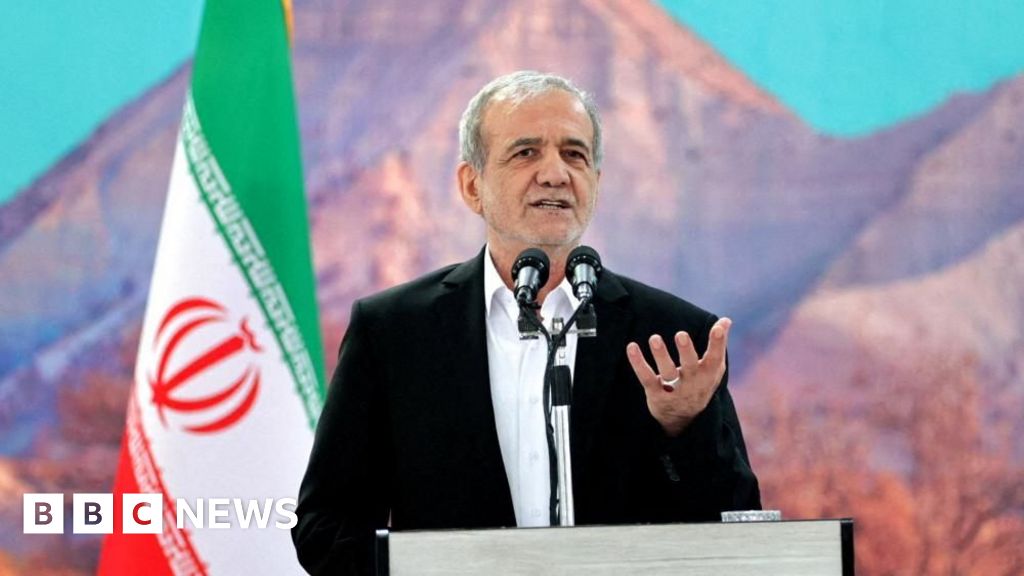
Pezeshkian Targeted: Inside Israel's Alleged Assassination Attempt
In a startling revelation that has sent ripples across the geopolitical landscape, Iranian President Masoud Pezeshkian claims he was the target of an Israeli assassination attempt. The incident, which reportedly left Pezeshkian and other high-ranking officials with minor injuries, underscores the volatile nature of the long-standing animosity between Tehran and Tel Aviv. This article delves into the details of the alleged attack, its implications, and the broader context of the escalating tensions in the Middle East.
The Alleged Attack on Tehran's Political Core
The incident reportedly occurred on June 16, amidst a highly sensitive meeting of Iran's Supreme National Security Council in Tehran. According to various reports, including those from Iran's Fars agency and Al Jazeera, six Israeli missiles struck the building where President Masoud Pezeshkian, Parliament Speaker Mohammad Bagher Ghalibaf, and Judiciary Chief Gholam-Hossein Mohseni Ejei were convened. The coordinated assault was reportedly designed to incapacitate, if not eliminate, the core of Iran's political leadership. Sources familiar with the situation suggest the missiles were aimed not only at the building's infrastructure but specifically at blocking escape routes and cutting off internal airflow, effectively trapping those inside.
Initial reports suggested the primary targets were Iran's top political figures. However, some accounts, like those from the Fars agency, also indicated an alternative primary target: Seyed Hassan Nasrallah, the leader of the Lebanese group. Regardless of the precise individual target, the intent, as widely reported, was to deal a severe blow to Iran's leadership structure. The audacity of such a strike, deep within the Iranian capital, speaks volumes about the level of intelligence and operational capacity potentially involved.
A Narrow Escape for Iran's Leadership
Despite the intensity of the missile barrage and the strategic targeting of exits, the Iranian leaders managed a dramatic escape. President Pezeshkian, along with Ghalibaf and Ejei, reportedly sustained only minor leg injuries from shrapnel. Their survival was attributed to their swift evacuation through an emergency exit as the building bore the brunt of the assault. The successful, albeit harrowing, escape prevented what could have been a far more catastrophic outcome, potentially decapitating Iran's political establishment. More details about the leaders' quick thinking during the ordeal can be found in discussions surrounding Tehran Attack: How Iran's Leaders Escaped Missile Barrage.
The damage inflicted on the Supreme National Security Council building was significant, with entrances and exits compromised and internal systems disrupted. This near-miss highlights the perilous environment in which regional politics operates, where leaders face direct threats in their own capitals. The fact that the Iran president Pezeshkian was injured, even lightly, during such a high-stakes meeting, underscores the profound level of infiltration or intelligence gathering that must have preceded the attack, pointing to a potential inside operation.
Pezeshkian's Direct Accusation and Denials
In the wake of the incident, President Pezeshkian did not mince words. During a high-profile interview with American journalist Tucker Carlson on Fox News, he explicitly accused Israel of attempting to assassinate him. "They tried, but they failed," Pezeshkian declared, confirming that he was in a meeting when the area was targeted. Crucially, he vehemently denied any American involvement, stating, "It was Israel. I was in a meeting. They tried to bombard the area where we were holding the meeting."
This direct accusation from a sitting head of state against another country, broadcast on international media, carries immense weight. It not only solidifies the Iranian narrative of Israeli aggression but also serves to absolve the United States of direct culpability in this specific incident, despite Washington's close alliance with Tel Aviv. Pezeshkian's willingness to openly name Israel signals a deepening of the already bitter rivalry and a potential shift in how Iran chooses to publicly attribute attacks against its leadership.
The Broader Context of Iran-Israel Tensions
The alleged assassination attempt did not occur in a vacuum. It unfolded during a period of heightened conflict between Iran and Israel, a shadow war that has long simmered but recently escalated into more direct confrontations. For 12 days leading up to the alleged attack on Pezeshkian, the region witnessed a surge in hostilities, claiming the lives of dozens of Iranian nuclear scientists and military personnel. These attacks, often attributed to Israel, have targeted strategic facilities and individuals perceived as vital to Iran's military and nuclear ambitions.
The underlying cause of much of this tension revolves around Iran's nuclear program. Israel and the United States maintain that Tehran's program aims to develop nuclear weapons, a threat they deem existential. Iran, conversely, insists its nuclear activities are purely for peaceful purposes, such as energy generation and medical applications. This fundamental disagreement fuels a cycle of sabotage, cyber warfare, and targeted strikes, with each side accusing the other of destabilizing the region.
The formal end of the recent conflict on June 24, following mediation efforts by the United States, saw both countries claim victory. However, the temporary truce has done little to assuage the deep-seated distrust and hostility. The demands for Iran to abandon its nuclear program persist, as does Tehran's defiance, setting the stage for continued friction and potential flashpoints.
Allegations of Mossad Involvement and Strategic Implications
Adding another layer of intrigue to the incident are allegations of Mossad involvement. Reports suggest that the operation to target Iran's leadership was aided by a group from the Mossad, Israel's renowned intelligence agency, purportedly infiltrated within Iranian territory. If true, this indicates an extraordinary level of intelligence gathering and operational capability within Iran's borders, allowing for precise targeting and execution of such a sensitive mission.
Such an alleged infiltration would underscore the clandestine nature of the proxy war and the lengths to which intelligence agencies go to achieve strategic objectives. The possibility of Mossad operatives facilitating an attack on the highest echelons of Iranian power would represent a significant intelligence coup for Israel, while simultaneously being a profound security failure for Iran.
Unpacking the Allegations: Why Target the Leadership?
Targeting the political leadership of a rival nation is an extreme measure, typically reserved for moments of acute conflict or as a last resort. The strategic rationale behind such an alleged move could be multifaceted:
- Decapitation Strike: Eliminating key decision-makers could plunge a nation into chaos, disrupt its command and control structures, and potentially alter its strategic direction.
- Deterrence: A clear message that no one, regardless of rank or location, is safe, potentially deterring future hostile actions.
- Retaliation: A direct response to previous attacks or perceived provocations by Iran or its proxies.
- Destabilization: Creating internal instability and uncertainty, weakening the regime from within.
The fact that Iran's Supreme Leader, Ali Khamenei, was not reportedly targeted—he was said to be commanding military responses from a secure bunker, with his family relocated—suggests a highly selective approach, perhaps aimed at the operational command rather than the ultimate spiritual authority. This selective targeting could be an attempt to apply pressure without triggering an all-out war, a delicate balancing act in the volatile region.
The Aftermath and Lingering Tensions
Despite the official cessation of direct hostilities between Iran and Israel on June 24, the alleged assassination attempt against President Pezeshkian casts a long shadow. The incident serves as a stark reminder that beneath the surface of diplomatic efforts, the fundamental disagreements and strategic rivalries remain fiercely potent. The truce, brokered by the US, is widely seen as temporary, a pause rather than a resolution.
The international community continues to watch with apprehension, recognizing that any misstep or perceived escalation could ignite a wider regional conflagration. The lingering demands for Iran to halt its nuclear program, coupled with Tehran's staunch refusal, ensure that the potential for renewed conflict remains high. The incident also highlights the perilous risks inherent in the shadow war, where intelligence operations and targeted strikes push the boundaries of conventional warfare, increasing the likelihood of unintended consequences. As long as the core issues dividing Iran and Israel persist, the region will remain a crucible of tension, with incidents like the alleged attack on Pezeshkian serving as stark warnings of potential future turmoil.