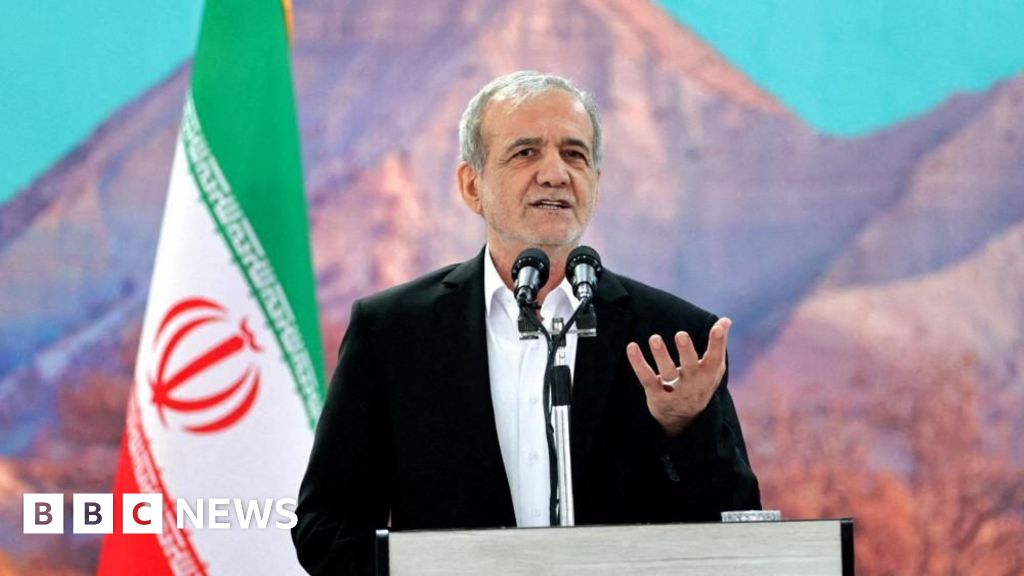
Iran President Masoud Pezeshkian Injured in Israeli Airstrike: A Deep Dive into the Tensions
The geopolitical landscape of the Middle East was rocked by a stunning development when reports confirmed that Iranian President Masoud Pezeshkian sustained injuries during an Israeli airstrike on Tehran. This incident, which occurred amidst heightened regional hostilities, not only put the spotlight on the vulnerability of Iran's top leadership but also underscored the precarious state of an already volatile relationship between two arch-enemies. The news of the
irã presidente ferido in such a daring attack quickly circulated globally, sparking intense debate about the true scope of the recent Iran-Israel conflict and its lasting implications.
The alleged assault, which took place on June 16, targeted a critical meeting of Iran's Supreme National Security Council in the heart of the capital. While officials initially downplayed the severity of the incident, subsequent details revealed a much graver scenario, painting a picture of a direct attempt to destabilize the Iranian leadership. President Pezeshkian himself later publicly accused Israel of orchestrating an assassination attempt, highlighting the unprecedented nature of this direct engagement between the two nations.
The Attack: A Narrow Escape in Tehran
The airstrike, reportedly carried out by Israel, struck with chilling precision at a moment when Iran's most senior political and security figures were gathered. Sources, including the Fars news agency, affiliated with the Islamic Revolutionary Guard Corps, and Al Jazeera, detailed how the attack unfolded during a crucial meeting of the Supreme National Security Council in Tehran. The objective, according to some reports, was nothing short of the assassination of Iran's top echelons.
During the intense bombardment, six missiles reportedly slammed into the building housing the high-level meeting. These missiles were not merely indiscriminate; they were strategically aimed to block critical entry and exit points, severely damaging the building's infrastructure and even cutting off internal airflow, effectively trapping those inside. Such a targeted attack suggests a significant intelligence operation, with some reports indicating assistance from a Mossad group allegedly infiltrated within Iranian territory.
President Masoud Pezeshkian was indeed present during this harrowing incident, suffering what were described as "light leg injuries," reportedly from shrapnel. He was not alone; other prominent figures also found themselves caught in the crossfire, including Parliament Speaker Mohammad Bagher Ghalibaf and Judiciary Chief Gholam-Hossein Mohseni Ejei. These senior officials, facing imminent danger, were forced to scramble for safety, eventually managing to escape through an emergency exit, a testament to the chaos and urgency of the moment. The scale of the attack and the daring escape underscore the audacity of the operation and the high stakes involved. For a deeper understanding of how the Iranian leadership navigated this perilous situation, read more about
Tehran Attack: How Iran's Leaders Escaped Missile Barrage.
Pezeshkian's Accusation: "They Tried, But Failed"
In the aftermath of the attack, President Pezeshkian did not shy away from directly confronting the allegations, nor from pointing fingers. During a candid interview with American journalist Tucker Carlson on Fox News, Pezeshkian explicitly accused Israel of attempting to assassinate him. His words were unequivocal: "They tried, but failed." This public declaration from a sitting head of state against another sovereign nation regarding an assassination attempt is rare and carries immense diplomatic weight.
Pezeshkian further elaborated on the incident, stating, "It was Israel. I was in a meeting. They tried to bomb the area where we were conducting the meeting." Crucially, he also dismissed any involvement of the United States in the alleged plot, emphasizing, "It was not the U.S. that was behind the assassination attempt against my life." This distinction is significant, as it aims to isolate Israel as the sole perpetrator and potentially mitigate broader international backlash that might involve the U.S. The president's defiance, despite sustaining injuries, signals Iran's resolve and refusal to be intimidated. His willingness to speak openly about such a sensitive security matter also serves as a propaganda victory for Iran, showcasing its leaders as resilient in the face of aggression. For more details on the specific targeting of President Pezeshkian, consider exploring
Pezeshkian Targeted: Inside Israel's Alleged Assassination Attempt.
Unpacking the Motives: Assassination or Message?
The precise motives behind the Israeli airstrike remain a subject of intense speculation and conflicting reports, even among Iranian sources. While Al Jazeera, citing its sources, unequivocally stated that the objective was to "assassinate the leaders of the three powers of Iran" (Executive, Legislative, and Judiciary), the Fars agency offered a slightly different narrative. Fars suggested that the primary target might have been Seyed Hassan Nasrallah, the formidable leader of the Lebanese Hezbollah group, who was possibly also present at or near the targeted location.
Regardless of the specific individual target, the broader strategic intent appears clear: to strike at the very heart of Iran's political and military command structure. This operation signals a profound escalation in the covert and overt conflict between Israel and Iran. Beyond the immediate political leadership, reports indicated that the offensive also aimed at "installations militares e científicas" (military and scientific facilities), suggesting a multi-pronged strategy to degrade Iran's capabilities across various sectors. The involvement of an alleged Mossad infiltration group further highlights the intelligence dimension of such a daring operation, indicating meticulous planning and on-the-ground support.
This incident occurred within the context of 12 days of intense confrontations between Israel and Iran, a period during which dozens of Iranian nuclear scientists and armed forces members were reportedly killed. The alleged targeting of the political elite, following such losses, suggests a deliberate shift in Israeli strategy towards decapitation strikes, aiming to eliminate key decision-makers and cripple the Islamic Republic's ability to respond or govern effectively. The fact that Supreme Leader Ali Khamenei, who was reportedly commanding Iran's military response from a specially prepared war room, remained untouched, while his family was moved to a secret bunker, underscores the perceived threat to the entire Iranian establishment.
Geopolitical Fallout and Lingering Tensions
The direct targeting of Iran's President, even if resulting in only minor injuries, carries significant geopolitical ramifications. While the broader conflict between Iran and Israel was officially declared "ended" on June 24, following claims of victory from both sides and crucial mediation by the United States, the reality on the ground is far from peaceful. The "truce temporária" (temporary truce) has done little to assuage underlying tensions, which remain exceptionally high.
The incident underscores the ongoing proxy wars and direct confrontations that characterize the Iran-Israel rivalry. Israel, along with the United States, continues to demand that Iran abandon its nuclear program, fearing the development of weapons of mass destruction. Tehran vehemently insists its nuclear ambitions are purely for peaceful purposes, a claim met with deep skepticism by its adversaries. This fundamental disagreement remains a flashpoint for potential future conflicts.
The strike on Pezeshkian's meeting also raises questions about intelligence capabilities and counter-intelligence failures. For Iran, it highlights a breach in its national security, forcing a re-evaluation of its protective measures for high-value targets. For Israel, it demonstrates a willingness to take extreme measures to achieve strategic objectives, potentially setting a dangerous precedent for future engagements. The event serves as a stark reminder that even with official ceasefires, the deep-seated animosity and strategic competition between these regional powers continue to simmer, threatening to boil over at any moment. The incident also sends a clear message about the lengths to which state actors are willing to go in pursuit of their national security interests, further destabilizing an already fragile region.
In conclusion, the alleged Israeli airstrike that injured Iranian President Masoud Pezeshkian marks a critical juncture in the long-standing animosity between Tehran and Tel Aviv. The audacity of the attack, targeting the very core of Iran's leadership, and Pezeshkian's defiant accusations, signal a dangerous escalation in their shadow war. Despite an official truce, the profound mistrust, unresolved disputes over Iran's nuclear program, and the strategic maneuvering for regional dominance ensure that tensions will remain elevated. This incident is not merely a chapter in their ongoing conflict but a potent warning that the pursuit of security interests, by any means necessary, continues to put the entire Middle East on a knife-edge.